Przypadek podobny do mojego - edesiak z bezsennością, narkolepsją, dysautonomią i depresją. Ale skoro depresja powoduje objawy dysautonomii i narkolepsję, to dlaczego nie tworzy się na nią leków? Tylko u zdrowych się leczy7 depresję, a jak ktoś ma np. GOMD, to już dla nich leków nie ma. :/
"Narcolepsy and Orthostatic Intolerance in an Adult With Ehlers-Danlos SyndromeMuhammad Haseeb Khan, MBBS,a,* and Umair Ahmed, MBBSa

Prim Care Companion CNS Disord 2022;24(2):21cr03138
To cite: Khan MH, Ahmed U. Narcolepsy and orthostatic intolerance in an adult with Ehlers-Danlos syndrome. Prim Care Companion CNS Disord. 2022;24(2):21cr03138.
To share: https://doi.org/10.4088/PCC.21cr03138
© Copyright 2022 Physicians Postgraduate Press, Inc.
aKing Edward Medical University, Lahore, Pakistan
*Corresponding author: Muhammad Haseeb Khan, MBBS, House # 351, TDA Colony Layyah, Pakistan 31200 (
haseebkhan1046@gmail.com).
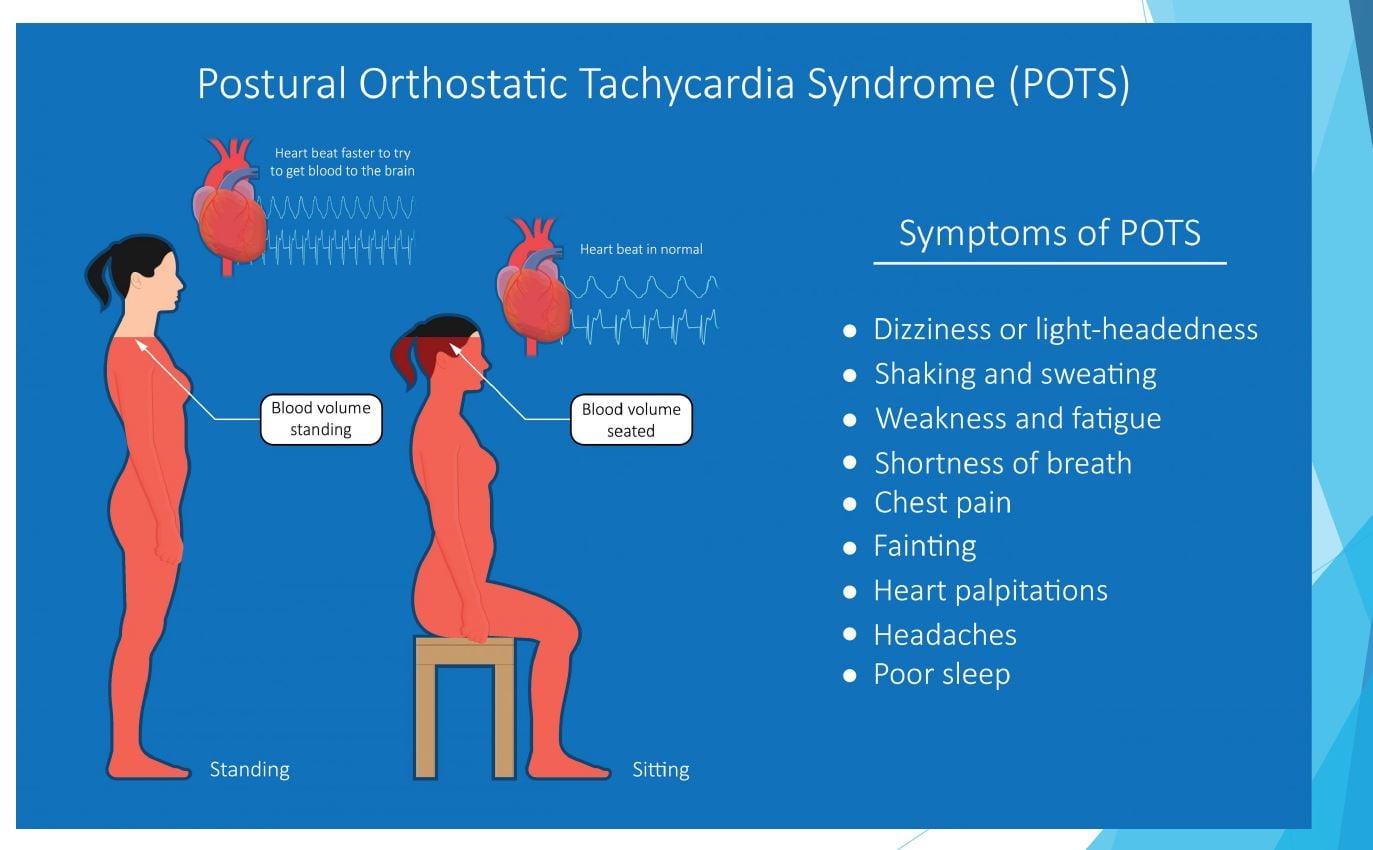
Narcolepsy is a chronic sleep disorder that is characterized by overwhelming daytime drowsiness and sleep attacks.1 The exact cause of narcolepsy is unknown, but people with narcolepsy have low hypocretin levels in the hypothalamus.2 Postural orthostatic tachycardia syndrome (POTS) is an autonomic syndrome of inappropriate tachycardia triggered by postural change.3 We present a case of narcolepsy diagnosed in a patient with Ehlers-Danlos syndrome (EDS) and POTS.
CASE REPORT
Ms A is a 26-year-old White woman who was diagnosed with generalized anxiety disorder and major depressive disorder in high school. She was also diagnosed with gastroparesis 3 years ago but has been having gastric problems her entire life. Last year, she was diagnosed with EDS and POTS (she had a sustained heart rate increase of ≥ 30 beats/minute within the first 10 minutes of head-up tilt, along with symptoms of orthostatic intolerance). She is taking multiple medications for these problems.
The patient was referred to the sleep medicine clinic for evaluation of insomnia. She usually goes to bed at 10 pm, and it takes her 2 hours to fall asleep. She feels that she wakes up multiple times in the middle of the night and has trouble going back to sleep. She is sleepy during the daytime, with an Epworth Sleepiness Scale4 score of 15. She was initially diagnosed with chronic insomnia and daytime hypersomnia and was advised to complete a sleep diary. A month later, she returned with her sleep diary, which showed that she wakes up multiple times during the night. She was referred for a full hypersomnia workup to rule out narcolepsy.
Polysomnography was done. The total recording time was 476.8 minutes, with a total sleep time of 294.8 minutes. Sleep efficiency was 63.7% (reduced). Sleep onset latency was 39.8 minutes, and stage R onset latency was 26.0 minutes. The sleep stage duration consisted of stage N1 (20.3%), stage N2 (51.2%), stage N3 (11.4%), and stage R (17.1%). Wake after sleep onset was 128.0 minutes. The patient spent 60.7% of the total sleep time in the supine position and the rest of the time nonsupine. The Multiple Sleep Latency Test5 showed the total number of naps attempted was 5 and total number of naps with sleep attained was 5. The mean sleep latency was 02:58 minutes. Sleep onset rapid eye movement (SOREM) was noted in 2 naps. In 1 nap, the SOREM was 3 minutes, which was strongly suggestive of narcolepsy.
DISCUSSION
The orthostatic intolerance in our patient is consistent with previous reports showing that POTS occurs in response to pooling of blood in the veins.6,7 Patients with EDS have more extensible vascular tissues, and it makes sense that they will have inappropriately excessive venous pooling that ultimately leads to orthostatic intolerance. This association was first reported by Rowe et al8 in 12 patients with EDS who were all diagnosed with POTS after tilt table testing. The association of narcolepsy and dysautonomia in our patient can be suggestive of central nervous system lesions and was previously reported in 2018 when inflammatory lesions in the right thalamus and amygdala were found in a patient with narcolepsy and postural tachycardia syndrome.9
This is the first reported case, to our knowledge, of narcolepsy and dysautonomia diagnosed simultaneously in an EDS patient. This report has 2 important implications. First, it shows a suspected association between sleep disorders and autonomic dysfunction in patients with EDS. Second, it shows that psychiatric disorders could lead to autonomic dysfunctions and narcolepsy in the long term. This idea opens up more avenues to investigate the relationship between psychiatric, autonomic, and sleep disorders, and more study is needed to evaluate this relationship".